
Welcome to the cradle of the Bulgarian state. Shumen sits at the crossroads of two ancient capitals, a UNESCO World Heritage Site, the birthplace of the Cyrillic alphabet, and the largest mosque in Bulgaria. Continuously settled for over 3,000 years, and now home to a growing British expat community.
Section 1
Two of the most important cities in early medieval Europe lie within a short drive of Shumen. Between them, Pliska and Veliki Preslav witnessed the creation of a European superpower, the adoption of Christianity, and the birth of the alphabet you are reading about right now.
When Alfred the Great was still battling Vikings in Wessex, the Bulgarian Empire based here was the third most powerful state in Europe after Byzantium and the Frankish Empire. The Pliska basilica was larger than anything in Britain until the Norman cathedrals, 200 years later.
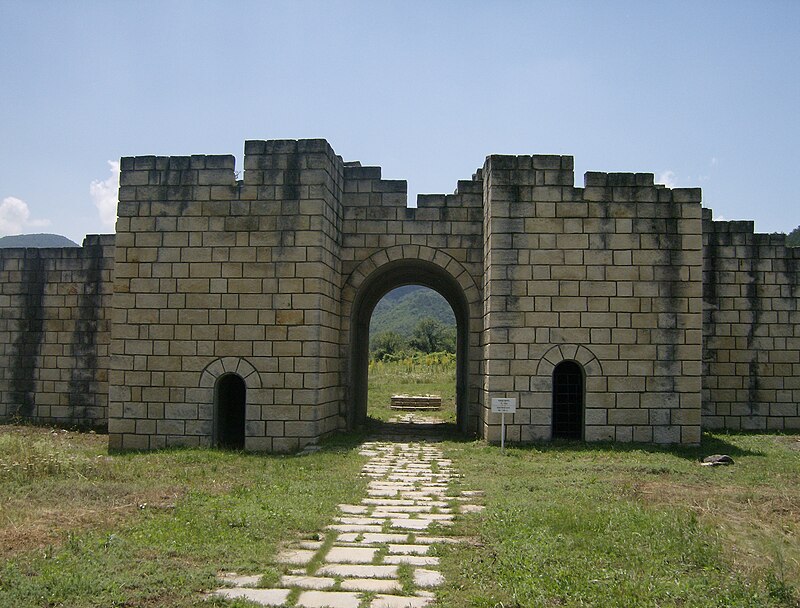
In 681 AD, Khan Asparuh led the Bulgar tribes across the Danube, defeated the Byzantine army, and established the First Bulgarian Empire with its capital at Pliska. What began as a sprawling military camp covering an astonishing 23 square kilometres gradually transformed into a stone citadel worthy of a great power.
The centrepiece was the Great Basilica, 102 metres long and one of the largest churches in the entire medieval Balkans. When Khan Boris I converted Bulgaria to Christianity in 864 AD, this was where the new faith took root. Today, the ruins are an open-air museum where you can walk among palace foundations, defensive walls, and the footprint of that enormous basilica. Entry costs just a few euros, and you will often have the place nearly to yourself.
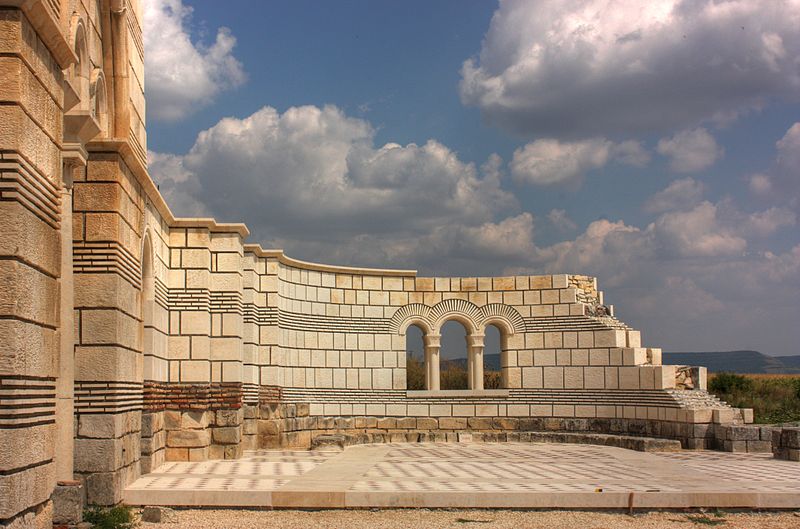
When Tsar Simeon the Great moved the capital to Preslav in 893 AD, he was making a statement. Preslav was not a military camp, it was a civilisation. Arab geographer Ibn Rusta described it as rivalling Constantinople in splendour. This was Bulgaria's Golden Age: a period of extraordinary literary, artistic, and architectural achievement.
The crown jewel was the Round Church, also known as the Golden Church. Its painted ceramic tiles, vivid greens, blues, and golds depicting saints, animals, and geometric patterns, represent some of the finest decorative art of the early medieval period. You can see beautifully preserved examples in the Veliki Preslav Archaeological Museum, which sits beside the ruins.
681 AD
Foundation of the First Bulgarian Empire
Khan Asparuh crosses the Danube and establishes Pliska as the capital. The 23 km² fortified camp is the largest in medieval Europe.
864 AD
Conversion to Christianity
Khan Boris I accepts Christianity from Constantinople. The Great Basilica at Pliska becomes the spiritual centre of the new Christian Bulgaria.
893 AD
Capital Moves to Preslav
Tsar Simeon transfers the capital to Veliki Preslav and launches the Golden Age. The Council of Preslav declares Old Church Slavonic the official language and adopts the Cyrillic script.
927 AD
Peak of the Golden Age
Under Tsar Simeon, Bulgaria stretches from the Black Sea to the Adriatic. Preslav is described by Arab travellers as a rival to Constantinople itself.
Section 2
You might associate Cyrillic with Russia, but the alphabet was created right here in the Shumen region. Over 250 million people use it daily, and it all started in Preslav.
In the late 9th century, scholars at the Preslav Literary School developed the Cyrillic alphabet to replace the complex Glagolitic script that Saints Cyril and Methodius had created. The new script was simpler, more practical, and based heavily on Greek uncial letters, making it far easier to learn and reproduce.
The decisive moment came at the Council of Preslav in 893 AD, which declared Old Church Slavonic (written in the new Cyrillic script) as the official language of the Bulgarian state and church. This was a revolutionary act, it replaced Greek in all official matters, giving Bulgaria a distinct cultural identity separate from Byzantium.
Today, Cyrillic is the third official script of the European Union and is used by more than 250 million people across a dozen countries, from Serbia to Mongolia. Every time you see those distinctive letters on a Bulgarian road sign, you are looking at Shumen's most far-reaching export.
Living in Shumen without some grasp of Cyrillic is a bit like trying to navigate London with a blindfold. The good news: the alphabet only has 30 letters, and several are familiar from Latin script. For a structured approach, our guide to the free 60-lesson Bulgarian course shows how BG60Day begins with Cyrillic and builds toward useful everyday situations.
Every year on 24 May, Bulgaria celebrates the Day of Bulgarian Education and Culture and the Slavonic Alphabet. It is a national holiday with parades, singing, and the kind of civic pride that would make even the most reserved Brit feel a lump in their throat. Shumen, as the birthplace of the script, takes the celebrations particularly seriously.
Section 3
Carved into a sheer 100-metre limestone cliff face, 23 metres above the ground, the Madara Rider is the only known large-scale medieval rock relief in all of Europe. It has been a UNESCO World Heritage Site since 1979.
16 km from Shumen • 15 min driveThe relief depicts a horseman spearing a lion while his dog runs alongside. Three Greek inscriptions beside the figure chronicle events from the reigns of Khan Tervel (701–718 AD), Khan Kormesiy, and Khan Omurtag. The carving itself is dated to the early 8th century, when Anglo-Saxon England was still building in wood and thatch.
In 2008, Bulgarians voted the Madara Rider as the symbol of Bulgaria, and it appears on the Bulgarian euro coins that entered circulation in January 2026. It is, quite literally, the face of the nation.
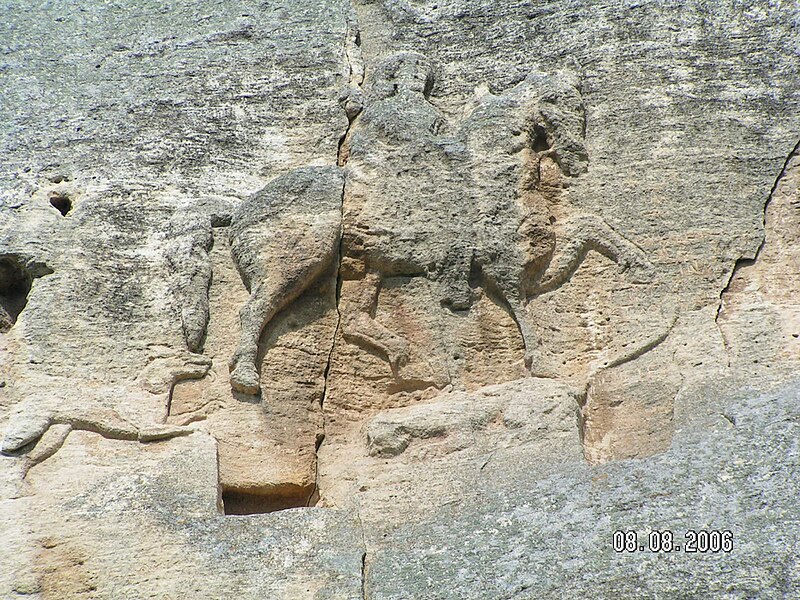
Bring binoculars, the relief is 23 metres up and has weathered considerably over 1,300 years. The on-site museum has excellent reproductions and context. The full reserve also includes Roman villa ruins, a Thracian cliff sanctuary, and the Madara Fortress (a stiff 386-step climb, rewarded with panoramic views). Budget about 2–3 hours for the whole site. Entry is around €3.
Section 4
Shumen itself is not merely a base for visiting ancient sites, the city has its own extraordinary landmarks spanning three millennia, from Thracian fortifications to Brutalist monuments.
3,000+ years of fortification
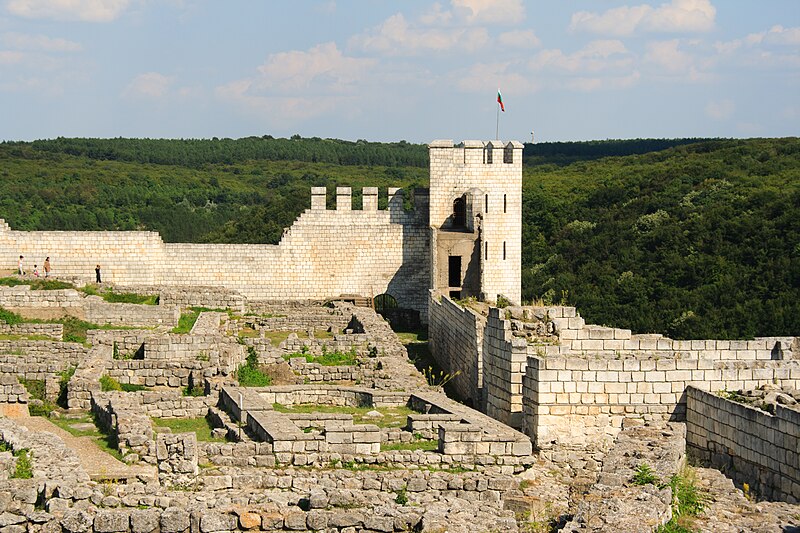
One of the longest continuously fortified sites in Europe. Thracians built the first walls, Romans expanded them, Byzantines strengthened them, and Bulgarians crowned it with 28 towers during the Second Bulgarian Empire. The fortress sits in the nature park above the city, surrounded by ancient beech forest. Free entry, stunning sunset views.
1740–1744 • Bulgaria's largest
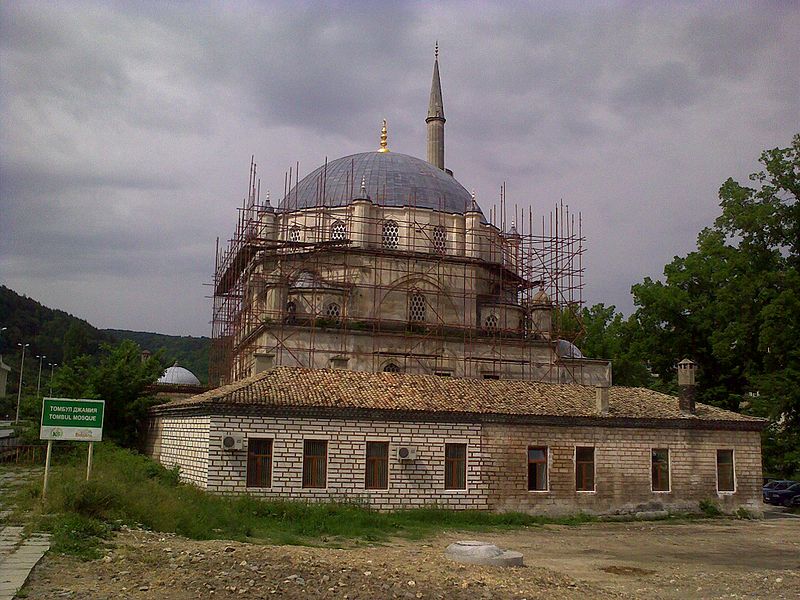
The Tombul Mosque is the largest in Bulgaria and the second-largest on the Balkans. Built during the Ottoman Tulip Period (1718–1730s aesthetics), it features a 25-metre dome, a 40-metre minaret, an elegant courtyard with a fountain, and exquisite calligraphy. It remains an active place of worship and is open to respectful visitors.
1981 • 52 metres tall
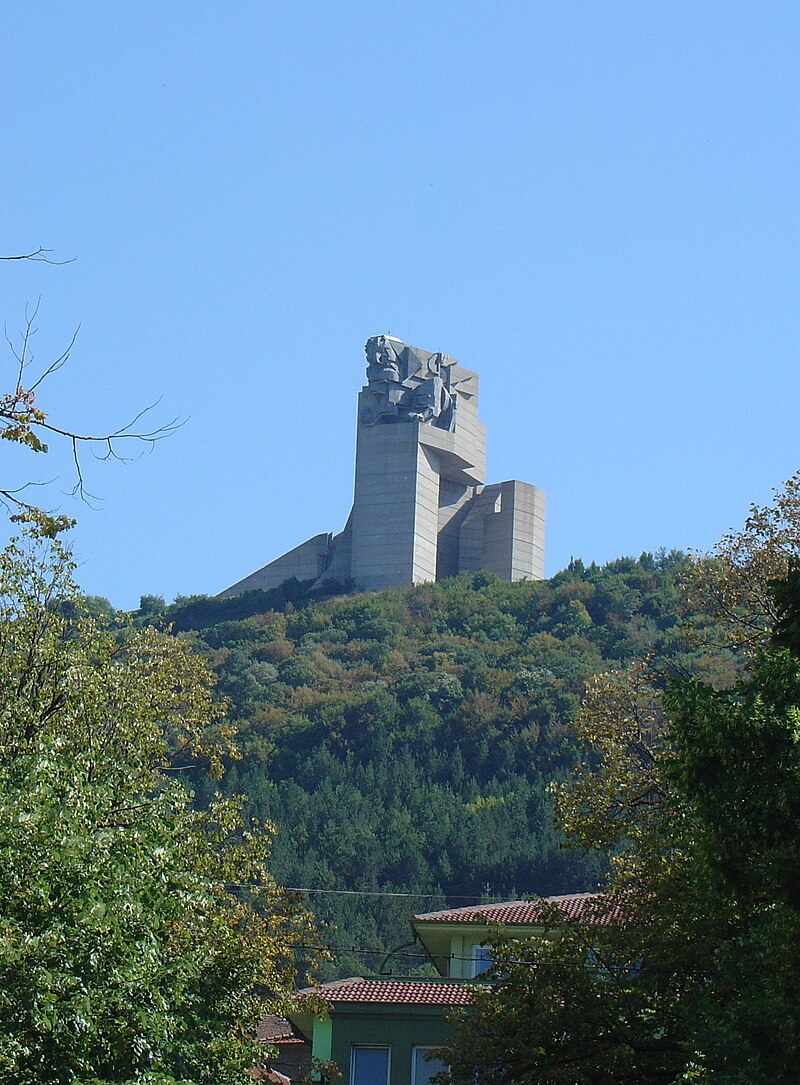
The Monument to the Founders of the Bulgarian State is a 52-metre Brutalist colossus perched on a hilltop, visible from 30 km away. Reach it via 1,300 concrete steps. Inside: 21 colossal sculptures and the largest outdoor mosaic in Europe. Love it or hate it, it is unforgettable, Brutalism at its most ambitious.
In the very centre of Shumen sits an extraordinary ruin, a vast communist-era civic square that was abandoned mid-construction when the regime fell in 1989. Massive concrete shells, intended as a cultural centre and shopping complex, stand open to the sky. It is a haunting, fascinating piece of accidental urban art. Most Brits who encounter it for the first time simply stop and stare. Plans to redevelop the site have come and gone for decades.
The steps are genuine, all 1,300 of them. In summer, start early or go in the evening. Bring water. There is a car park partway up if the full climb is not practical. The views from the top are worth every step: on a clear day you can see Madara, the Ludogorie plain, and the distant glint of the Danube.
Section 5
Rising directly above the city, the Shumen Plateau is 3,930 hectares of dense forest, rare wildflowers, cave systems, and well-marked trails. It is Shumen's back garden, and one of the best-kept natural secrets in Bulgaria.
The park covers a limestone plateau with 90% forest cover, predominantly oak and beech. The Bukaka Reserve protects ancient Balkan beech trees, gnarled, moss-covered giants that have never been logged. In spring, the forest floor erupts with wildflowers: the park hosts over 550 plant species, including 14 species of wild orchid.
Birdwatchers will find over 200 species recorded in the park, including golden eagles, eagle owls, black storks, and semi-collared flycatchers. Mammals include wild boar, roe deer, red foxes, and several species of bat in the cave systems.
Hidden beneath the plateau lies Biserna Cave, 2,716 metres of explored passages decorated with stalactites, stalagmites, and the “cave pearls” that give it its name. Access is seasonal and requires a guide; enquire at the park information centre in the city. It is a genuine adventure, not a sanitised tourist cave.
The park has seven marked hiking trails (M1–M7) and several cycling routes, ranging from gentle forest walks to full-day ridge traverses. Here are the highlights:
M5: “Bulgaria Originates from Here”
The flagship trail. Connects the Fortress, the Founders Monument, and key viewpoints. Passes through the Bukaka beech reserve. The full experience of Shumen's history and nature in a single walk.
M4: “Journey to the Past”
A shorter loop focused on the medieval fortress and its surroundings. Ideal for families or a quick afternoon outing. Well-shaded in summer, with information boards along the route.
M1: “Adrenaline”
A steeper, rockier trail with scrambles and exposed sections. Best for confident walkers who want a proper workout. The views from the cliff edges are spectacular.
Cycling: Forest Loop
A marked cycling route through the plateau forest on fire roads and packed-earth tracks. Mountain bike recommended. The descent back to Shumen is exhilarating.
Cycling: Plateau Traverse
A longer ride crossing the full plateau, connecting to trails towards Madara. Bring plenty of water and a puncture kit, the terrain is rough limestone in places.
M6: “Orchid Trail”
A gentle loop through meadows and forest edges where wild orchids bloom from late April to June. Best combined with the Bukaka Reserve for a half-day of nature spotting.
If you are used to walking in the Peak District or the Lake District, you will find the Shumen Plateau gentler but warmer. Summers can hit 35°C, so carry water and start early. In winter, the trails are often snowy and quiet, pack layers. The biggest difference from the UK? You will almost certainly be the only person on the trail.
Check the live Shumen forecast and Bulgaria climate guide before setting out, especially when summer thunderstorms, winter ice or strong wind are possible on the plateau.
Section 6
At the foot of the Shumen Plateau lies the village of Osmar, home to medieval monks who carved churches into sheer cliffs, and to a centuries-old winemaking tradition that produces one of Bulgaria's most distinctive drinks. The Bulgarian food guide's Shumen route connects this local wine context with the city market, an ordinary lunch and northern Black Sea cooking.
12 km from Shumen • 15 min driveBetween the 12th and 14th centuries, Hesychast monks, followers of a mystical Christian tradition that sought union with God through silence and solitary prayer, carved a network of chapels, cells, and passages into the limestone cliffs above Osmar. These are not neat, tidy ruins: they are raw, atmospheric, and profoundly moving.
The monks chose these remote cliff faces deliberately. Hesychasm taught that divine light could be perceived through extreme isolation and meditative prayer, and these vertiginous perches were about as isolated as you could get. Some cells are accessible only by ladders or narrow ledges. The surviving frescoes, faded but still visible, depict saints and biblical scenes in the distinct style of the Second Bulgarian Empire.
Nearby, “The Eye” (Okoto) is a natural rock formation, a perfect ring eroded through the cliff face, that frames the sky like a giant stone pupil. It is a short walk from the monasteries and well worth the detour.
Pelin is a herb-infused wine unique to Bulgaria, and the Osmar variant is widely considered the finest. The tradition stretches back centuries, local legend claims that when Khan Krum ordered all vineyards in Bulgaria destroyed in the 9th century (as part of his anti-alcohol laws), he spared Osmar's vines because the Pelin was too good to lose.
The wine is still made the old way: local grapes are fermented, then steeped in massive 5-tonne oak barrels with a carefully guarded blend of over 30 wild herbs, including wormwood (pelin in Bulgarian, hence the name), thyme, wild mint, and yarrow. The herbs steep for exactly 45 days. The result is a complex, aromatic wine with a bitter-herbal finish that grows on you rapidly.
Local Grapes
Harvested from Osmar's south-facing slopes
Base Wine
Fermented using traditional methods
30+ Wild Herbs
Wormwood, thyme, mint, yarrow & more
45-Day Steep
In 5-tonne oak barrels
Pelin Wine
Aromatic, herbal, uniquely Bulgarian
Osmar Pelin is sold in most Shumen supermarkets and at the annual Pelin festival in Osmar (usually September). A bottle costs around €3–5. If you are a wine drinker accustomed to Merlot or Sauvignon Blanc, Pelin is going to be a surprise, think vermouth meets herbal tea. Serve it chilled. It is an acquired taste, but once acquired, it is permanent.
Section 7
So you have seen the ancient ruins and tasted the Pelin wine. But what is it actually like to live here? Here is the honest picture.
Shumen is significantly cheaper than Sofia or Varna, and astronomically cheaper than the UK. A one-bedroom flat in the city centre rents for around €150–250 per month. A three-course meal at a decent restaurant costs €8–15. Monthly utilities (heating, electricity, water, internet) run to roughly €80–120 in winter, less in summer. Bulgaria adopted the Euro in January 2026, so there is no currency exchange hassle.
| Item | Shumen (approx.) | UK equivalent |
|---|---|---|
| 1-bed flat (city centre) | €150–250/month | £800–1,200/month |
| Restaurant meal (3 courses) | €8–15 | £25–40 |
| Monthly utilities | €80–120 | £180–250 |
| Cappuccino | €1.20–1.80 | £3.50–4.50 |
| Monthly supermarket shop | €150–200 | £350–500 |
| Gym membership | €15–25/month | £30–50/month |
Let us be blunt: Shumen is not Sofia or Varna. English is not widely spoken outside a handful of hotels and the university. At the municipality office, the doctor's surgery, and the supermarket checkout, you will need at least basic Bulgarian. Younger people tend to speak some English, but the older generation, and they are the ones running most of the bureaucracy, largely do not.
We strongly recommend starting Bulgarian before you move. Our free Bulgarian course guide explains the 60-day sequence and what progress can realistically look like. Even a firmer grasp of Cyrillic and a bank of well-practised phrases can make daily life here easier.
Shumen's British expat community is small but growing. It is not the Costa del Sol, you will not find English pubs on every corner. Instead, you will find a close-knit group of people who chose Shumen deliberately: for its affordability, its history, its unspoilt countryside, and its lack of mass tourism. Most long-term Brits here speak at least basic Bulgarian and have integrated into local life.
Shumen is a university city. The Konstantin Preslavsky University of Shumen (named after the great medieval capital) has over 7,000 students, which gives the city a younger, more cosmopolitan feel than you might expect. There is a good theatre, a regional history museum, and Arena Shumen, a modern multi-purpose venue that hosts concerts, sports, and cultural events.
The Hemus Motorway connects Shumen to both Sofia (roughly 3.5 hours west) and Varna (about 1 hour east). The Black Sea coast is 80 km away, close enough for day trips. Shumen has a small railway station with services to Varna, Sofia, and Ruse. For daily life, most expats drive; the city itself is compact enough to walk in good weather.
Varna Airport is 90 minutes by car and has direct flights to London (Luton and Stansted) year-round, plus Manchester and other UK cities seasonally. Sofia Airport has a wider selection of routes. Budget airlines keep prices reasonable, off-peak returns for £50–100 are common.
We have written detailed guides on the practical aspects of British life in Bulgaria: